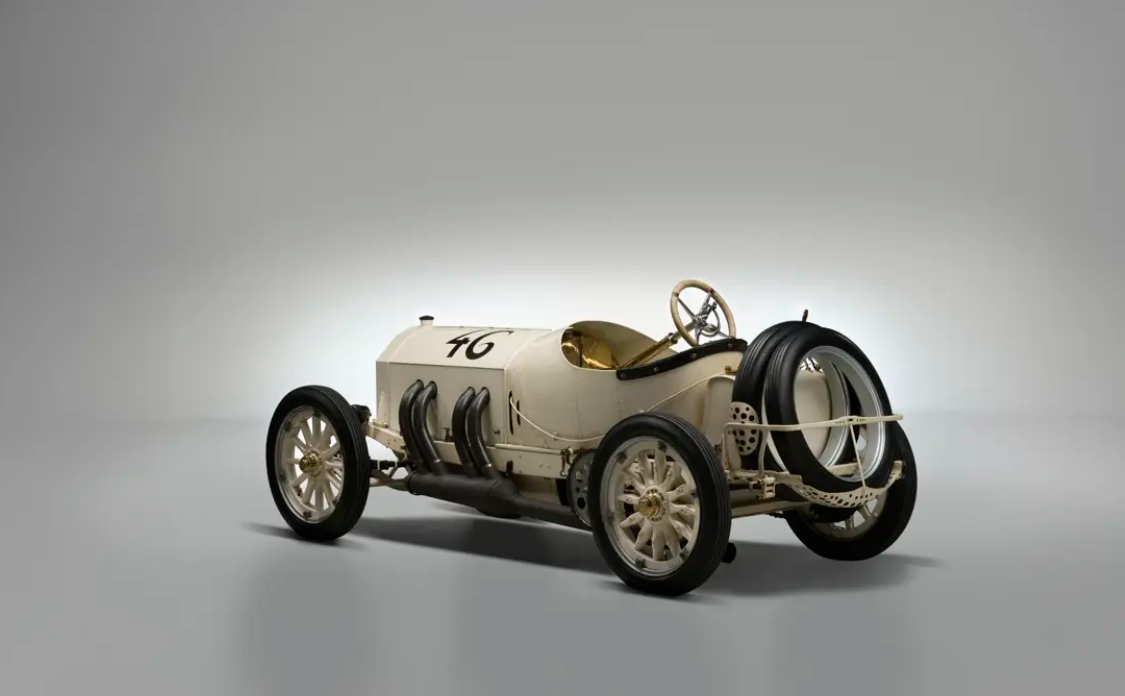
A brief but pivotal era in motorsports history gave birth to some of the most exhilarating and legendary automobiles ever created.
This period, characterized by groundbreaking innovations, propelled motorcars to an unparalleled level of performance that remained unchallenged for decades. This peak, which lasted from 1904 to 1908, was exclusively reserved for racing and never intended for public road.
The Mercedes, which was introduced in 1901 by Daimler Motoren Gesellschaft, quickly established its reputation as the finest car of its time. The masterwork of Wilhelm Maybach and Paul Daimler’s design team, the Mercedes built upon earlier designs of Gottlieb Daimler, Paul Daimler, and Panhard et Levassor.
The Daimler motorcars that existed before 1902 were still heavily based on Gottlieb Daimler’s pioneering designs of the 1880s These Cannstatt Daimler cars were high-quality and expensive machines, but by 1901 were heavily outclassed by the products of France.
Enter Emil Jellinek, a DMG sales agent and motoring enthusiast. He felt Daimler was not producing cars as modern as the competition and challenged engineers to design something “Not for tomorrow but for the day after tomorrow.” To tempt Maybach engineers to design this superior car for him, he offered a prize of 550,000 DM.
Maybach delivered on the challenge, producing the groundbreaking product we now know as a Mercedes. To avoid conflicts with licensing of the Daimler name throughout Europe DMG needed a different name for this product, so Jellinek’s daughter Mercedes became the namesake.
Daimler knew racing success sold cars so he was determined to dominate the highest level of competition, and its new Mercedes racing cars quickly showed their capability against their established rivals. However, a devastating fire soon destroyed the factory fleet of rennwagens. In a daring move, Daimler borrowed previously sold customer 60 hp cars to compete in the upcoming grands prix
In 1907, Mercedes showcased its technical expertise once more by assembling a comprehensive racing package that dominated the competition. For 1908, a specially enlarged version of the 120 horsepower engine was constructed. For the 1909 event, Mercedes developed a unique and hardier engine of the same displacement.
Mercedes’ efforts were once again rewarded and propelled the driver Otto Salzer to victory. His time of 7 minutes and 7 seconds stood for an impressive 15 years.
The Semmering Mercedes would race one more time for the factory, this time driven by the “Red Devil” Camille Jenatzy in the unlimited displacement race in Belgium. From there Daimler sent the car to London, where it was purchased by wealthy Australian sportsman Lebbeus Hordern. It passed through the hands of a few other Australians and notably made an appearance at an event marking the introduction of the new Mercedes 300. Held on an Australian racing circuit, the nearly 50-year-old Mercedes humbled the technological marvel of the 300 with its superior performance.
In 1962 Tony Hulmanparted paid the unheard-of sum of $30,000 and acquired the Mercedes for the Indianapolis Motor Speedway Hall of Fame Museum.
Extracts from and source: When Giants Roamed the Earth | RM Sotheby’s