South East Queensland beekeepers are battling to save their livelihoods as varroa mite devastates colonies, costs soar and a new biosecurity threat raises fears for the future of Australia’s pollination industry.
FOR generations, Queensland’s commercial beekeepers have worked in rhythm with the seasons, nurturing the tiny pollinators that underpin Australia’s food supply.
Today, many are simply fighting to keep their bees alive.
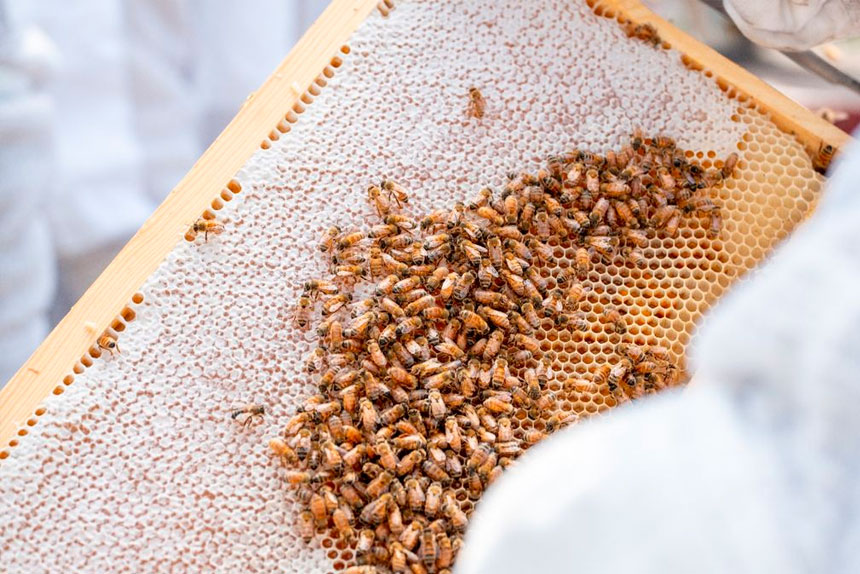
Commercial beekeepers say the spread of the destructive varroa mite has pushed the industry to breaking point, with thousands of colonies already lost and the financial pressure becoming overwhelming.
Now, the recent detection of two Asian honey bee colonies in south-western Brisbane has heightened concerns that another biosecurity challenge could further complicate an already desperate battle.
Flagstone beekeeper Jason Roebig, owner of Bee All Natural, has experienced losses of up to 800 hives since the beginning of the year.
“We’ve been losing hives hand over fist ever since,” he said.
“We found the mites in January and started dealing with them, but by March we just got absolutely smashed.”
Despite those staggering losses, Mr Roebig said other commercial operators had lost “thousands upon thousands” of colonies.
“We have to do whatever we can now because every day we’re losing more colonies,” he said.
Ipswich beekeeper Duane Blake, from Honey and Hive, said the decline had been swift and devastating.
“Between September and January, I never lost a single hive,” he said.
“Since the middle of January, everything changed.”
In less than six months, Mr Blake has lost 85 colonies.
The crisis extends well beyond honey production. Honey bees contribute an estimated $4.6 billion to Australian agriculture each year through pollination, supporting the production of countless fruits, vegetables and nuts.
Mr Blake said one of the industry’s biggest challenges was the emergence of so-called “mite bombs” — collapsing colonies that release thousands of mites onto foraging bees before they invade healthy hives.
“You might inspect your hive and find you’re below the treatment threshold,” he said.
“But you could literally have a thousand mites arrive that same day on bees coming from dead colonies.”
Adding to the frustration, beekeepers are also watching treatment options become increasingly limited as the pest develops resistance.
“Four of the eight treatment options available to us were basically taken out straight away,” Mr Blake said.
“That leaves us with very few tools.”
While Australia’s beekeeping industry had spent years preparing for varroa’s inevitable arrival, Mr Blake believes governments failed to establish an effective long-term strategy.
“It was never an if. It was always a when,” he said.
“Everything has been done on the fly. The authorities have always been two steps behind.”
The financial burden is equally relentless.
“It is costing us around $8,000 every month just to keep our colonies alive,” Mr Roebig said.
“At the same time, there’s virtually no honey production because the bees are under so much stress from repeated treatments.
“It’s like trying to hold back the tide with a fork.”
Rather than compensation, Mr Roebig said the industry needed immediate assistance to help cover the soaring cost of treatments before more businesses disappeared.
“We’re not asking governments to write us a blank cheque,” he said.
“Our pollination industry funds itself through levies, but as we lose hives we produce less honey, which means less income and fewer levies.
“We can’t even support our own industry anymore.
“No one’s seeing the perfect storm that’s building.”