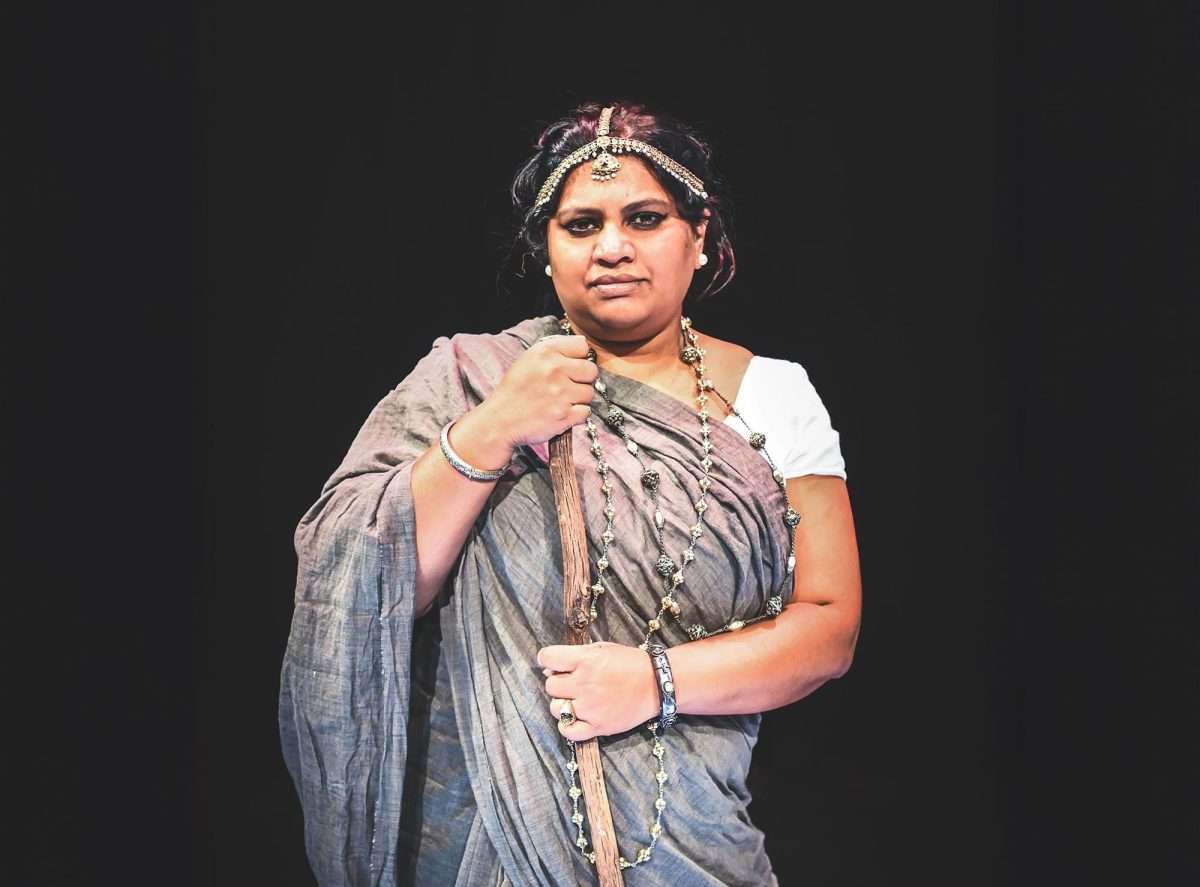
IN April this year, the creative heartbeat of Logan was gifted with the arrival of Sri Lankan-born, multidisciplinary artist Kuweni Dias Mendis. With her gentle presence and deep listening, she is embarking on a three-month artist residency at the Logan’s Living Museum, a space within the Kingston Butter Factory precinct. Here, among the sounds of daily life and the flow of the Logan River, Kuweni is shaping Riverscope—a contemporary arts project steeped in community, nature, and the migrant experience.
At its core, Riverscope is about belonging. Through walking, mapping, watching, and deep listening, Kuweni is not just studying a river—she is learning from it. Her research takes her along the Logan River, known to the Yugambeh people as Dugulumba, from its mountainous source near Mount Barney to its journey across the city, before it finds rest in Moreton Bay. It’s a river with stories, carrying the memories of people, animals, and land. Kuweni’s work honours these layers, not as a distant observer, but as an artist deeply engaged with place.
“I let the land speak directly to me,” she explains, recalling her time in Beechmont in the Gold Coast Hinterland, where she first learned to walk and listen with Country under the guidance of Wanjerriburra and Manunjali Elders. These teachings continue to shape her approach in Logan. As part of her residency, she has respectfully undertaken cultural protocols and ceremonies with local Indigenous Elders—essential steps for any artist working meaningfully on Country.
Kuweni's artistic lens is wide and inclusive. She works with fibres, pigments made from the earth, ritual drawings, sound, movement, video, and installation. Everything is connected. “I’m a place-based artist,” she says. “That means I make my own pigments and tools from the land I work on. My art is born from the place and returns to it.” Her practice is rooted in ritual drawing, a sacred tradition from Sri Lanka that she is helping to keep alive in contemporary, meaningful ways.
Her diasporic identity as a Sri Lankan Australian is not just an influence—it’s the essence of her work. As she puts it, “Diaspora are people who are migrants, who hold the culture of their homeland within the new culture of their new country.” This duality allows Kuweni to explore themes of cultural regeneration, safety, and community in nuanced, grounded ways. It’s what drew her to Logan in the first place.
“There are people from 235 different cultures living here,” she says. “Logan has a power to hold space for that many cultures. That’s rare. And it’s not performative—it’s real. People can genuinely belong here.”
Belonging is a thread that runs through every conversation Kuweni has with locals. She intends to speak with people as part of her Riverscope project. From Elders to recent migrants, to those who find refuge on the riverbanks without a roof to call home. In one conversation, she noted how the river offers a feeling of safety even to those with nowhere else to go. “It reminds me of pilgrimage in my own country,” she reflects. “In Sri Lanka, pilgrimage isn’t just religious—it’s about walking, finding, your own inner essence and childlike wonder.”
Her art, much like a pilgrimage, invites people to slow down, reflect, and reconnect—with their own stories, with each other, and with the land. At the Logan Living Museum, Kuweni’s residency is not just about displaying art—it’s about deepening the conversation around who we are, where we come from, and where we are going. It aligns perfectly with the Museum’s vision: to illuminate Logan’s past and present through community stories, told in the voices of those who live them.
And Logan is listening. From gallery visitors to community elders, from school groups to curious passersby—people are responding to Kuweni’s thoughtful engagement. Her work, although grounded in the specific geography and history of Logan, resonates far beyond its borders. It speaks to the universal desire to be seen understand, belong, and feel connected.
As her residency continues through to July, Kuweni will keep walking the river’s path, listening to its rhythms, and weaving its stories into her art. She is not here to capture Logan—she is here to walk beside it, honour it, and invite others to do the same.
In a world that often rushes past its own stories, Kuweni Dias Mendis reminds us to pause, listen, and belong.
JUNE WORKSHOP
• For upcoming workshops go to www.loganarts.com.au
Walking with the River: Kuweni Dias Mendis and the Spirit of Logan


You May Also Like